Hoppo Stories · ages 5 to 8

Problem solving stories for kids

Problem solving at five or six is mostly everyday: how to get across, how to make it stand up, what to do when a friend cannot keep up. A story is a safe place to practise noticing the problem, thinking of a way and trying it.

In each of these stories the friends meet a problem they can see, try something, and find a way that works, without magic or a grown-up stepping in.

What makes a good problem solving story

  • The problem is clear from the pictures: the creek is wide, the logs wobble.
  • The characters think out loud, so kids hear how a plan is made.
  • The first try does not always work, and that is part of the story.
  • The answer is something a child could try, like small steps or a stronger shape.
  • Kids can test it themselves after the story.

The stories

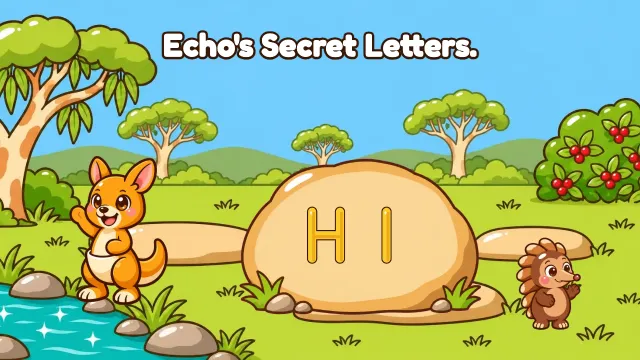
Cover of Echo's Secret Letters

Echo's Secret Letters

A mystery to work out: who is drawing the letters? Hoppo looks closely, finds tiny footprints and follows the crayon dots.

About 2 minutes · move along: Draw a big H with Echo

Read-aloud tips for problem solving

Stop at the problem

When the problem shows up, pause and ask, "What could they do?" Take every idea, then read on to see what the friends try.

Test it for real

Make a square and a triangle from paper strips and tape, and push on the corners. Which one wobbles?

Find the small hop

Pick something your child finds hard and break it into three small steps, like Hoppo's rock, log and puddle.

Say the plan line

Pip's words make a handy three-step plan for anything: "Plan it, build it, try again!"

Questions

Are these STEM stories?

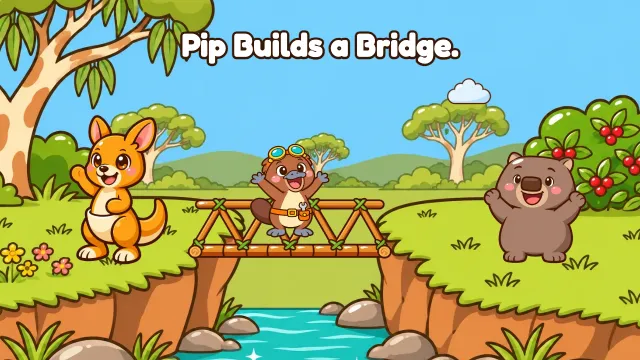
Pip Builds a Bridge has one simple engineering idea (triangles hold their shape better than squares) and an activity to test it. The others are about everyday problems.

What age are these stories for?

Kids 5 to 8. Each one is about two minutes to watch or read aloud.

Is there an activity to go with each story?

Yes. Each story's page has a no-screen activity that practises the same thing.